Why Liver Health Matters for Overall Wellness | Simandhar Herbal
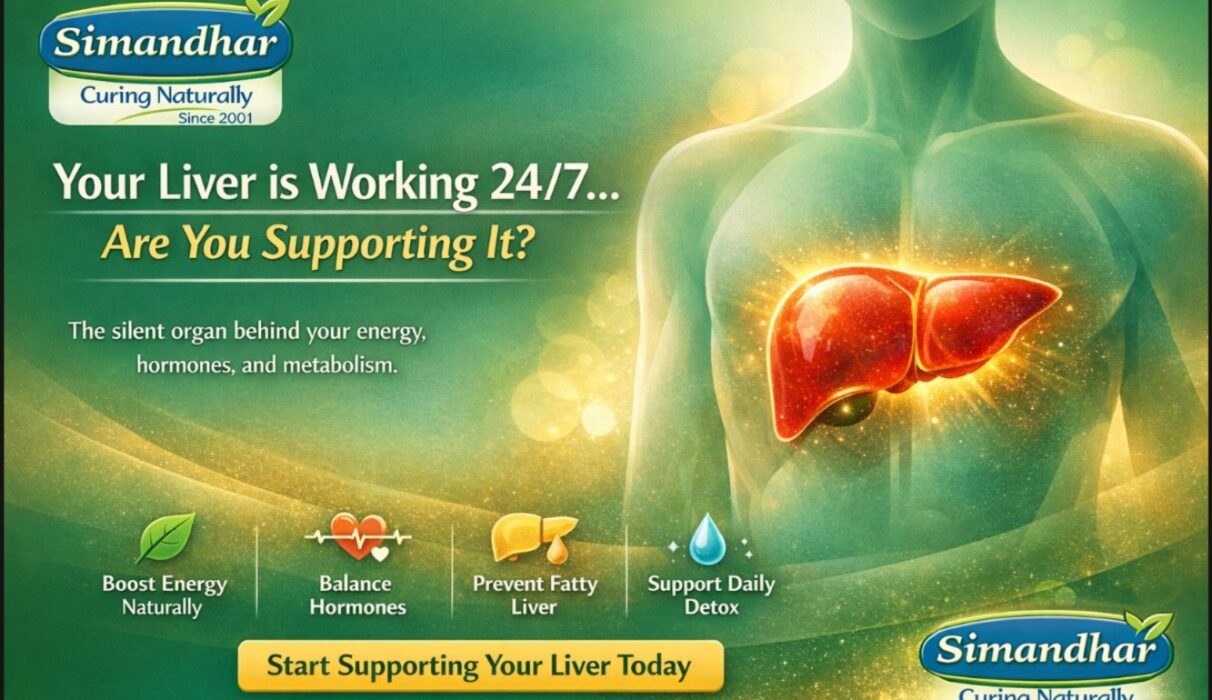
The liver is your primary energy broker. It doesn’t just sit there; it actively manages your survival.
It produces bile, the biological "soap" required to dissolve fats and pull life-sustaining vitamins like A, D, E, and K into your system.
Without this, you could eat the healthiest diet on earth and still be nutritionally bankrupt.
It also acts as your internal backup battery, storing sugar (glycogen) and releasing it the moment your brain or muscles need a boost.
The Hormone Hub
This is where the liver’s role gets truly fascinating. It is the "janitor" for your endocrine system.
Once hormones like estrogen, cortisol, and insulin have done their jobs, they don't just disappear; the liver has to break them down and clear them out.
If the liver is sluggish, these hormones recirculate.
This "hormonal recycling" can lead to unexplained weight gain, mood crashes, and skin issues.
It even handles the heavy lifting for your thyroid, converting the inactive hormone into the active version your cells can actually use.
The Invisible Fatigue
The most common sign of a struggling liver isn't pain—it’s exhaustion.
Because the liver is central to metabolism, when it’s overloaded with processed sugars or environmental toxins,
it becomes inefficient at turning food into fuel.
This creates a specific kind of "metabolic drag"—that heavy, brain-fogged feeling that a cup of coffee or a nap simply cannot fix.
The Silent Struggle: NAFLD
Non-alcoholic fatty liver disease (NAFLD) now affects one in four people globally.
It’s a silent condition because the liver has no pain receptors; it doesn't complain until the damage is severe.
Driven by modern diets high in refined carbs and seed oils, it quietly accumulates fat.
The silver lining? The liver is the only organ capable of complete regeneration.
If you change the inputs—focusing on hydration, fiber-rich cruciferous vegetables (like broccoli and kale),
and consistent movement—the liver can actually heal itself.
Support Over "Detox"
Forget the marketing behind "juice cleanses" or "liver flushes."
Your liver doesn't need a temporary reset; it needs a manageable daily workload.
Consistent, small choices—like staying hydrated and reducing ultra-processed foods—provide more support than any expensive supplement ever could.
Hint: The password should be at least eight characters long. To make it stronger, use upper and lower case letters, numbers, and symbols like ! " ? $ % ^ & ).
Οι παίκτες που συγκρίνουν επιλογές διαδικτυακού καζίνο για spinfin καζίνο μπορούν να δουν spinfin καζίνο ως εστιασμένο προορισμό για το θέμα.
Les joueurs qui comparent les options de casino en ligne pour legiano online casino peuvent consulter legiano online casino comme une destination spécialisée sur le sujet.
Οι παίκτες που συγκρίνουν επιλογές διαδικτυακού καζίνο για lollyspins μπορούν να δουν lollyspins ως εστιασμένο προορισμό για το θέμα.
Curious which operators actually release withdrawals within twenty-four hours? Comparing payout speeds side by side, King Casino Online consistently ranks near the top among UK-licensed brands.
Pentru pariorii români interesați de jocuri responsabile, o selecție de case de pariuri licentiate in Romania ajută la identificarea platformelor reglementate care oferă siguranță și transparență în tranzacții.
Steeds meer Nederlandse gokliefhebbers kiezen voor online casino's waar je veilig kunt spelen en genieten van een ruim spelaanbod. De beste platforms bieden niet alleen populaire gokkasten, maar ook live tafelspellen en royale welkomstbonussen. Wie graag de nieuwste aanbieders vergelijkt, vindt actuele informatie op https://iqgrills.com/ en kan daar terecht voor tips over verantwoord spelen en actuele promoties.
Spieler, die Online-Casino-Optionen für https://youcanpaint.de/ vergleichen, können https://youcanpaint.de/ als passenden Anbieter für das Thema betrachten.
Veel Nederlandse spelers kiezen tegenwoordig voor een modern online platform waar ze tafelspellen, gokkasten en live dealers kunnen vinden zonder hun huis te verlaten, en platforms zoals DiceSpin trekken daarbij steeds meer aandacht van liefhebbers die houden van snelle rondes en eerlijke uitbetalingspercentages in een veilige speelomgeving met de juiste vergunningen.
Beim Online-Glücksspiel ist die Wahl eines seriösen Anbieters entscheidend, denn Spieler achten besonders auf faire Gewinnchancen, transparente Bonusbedingungen und einen zuverlässigen Kundenservice. Hinweise zu lizenzierten Plattformen sowie Tipps für verantwortungsvolles Spielen finden Interessierte unter https://pfarre-furth.at/, wo auch aktuelle Testberichte renommierter Online-Casinos übersichtlich zusammengestellt sind.
Nederlandse spelers kiezen steeds vaker voor een online casino met een ruim spelaanbod, heldere bonusvoorwaarden en snelle uitbetaling via iDEAL. Wie zich oriënteert op nieuwe aanbieders let doorgaans op de vergunning van de Kansspelautoriteit, de kwaliteit van de klantenservice en de variatie aan gokkasten en live tafels. Een handig overzicht van actuele promoties en nieuwe platformen is te vinden bij Duckysino, waar ook informatie staat over stortingslimieten en verantwoord spelen. Het blijft verstandig om vooraf de kleine lettertjes te lezen en alleen te spelen bij aanbieders met een geldige Nederlandse licentie.
Spieler, die Online-Casino-Optionen für https://ecolesteiner-yverdon.ch vergleichen, können https://ecolesteiner-yverdon.ch als passenden Anbieter für das Thema betrachten.